

The Future of CRM Security: Salesforce Biometric Authentication Explained
Customer data is one of the most valuable assets for a company and with the increasing reliance on a CRM, ensuring data security is no longer optional but a necessity. In this scenario, traditional methods like PINs and passwords are proving insufficient, and this leads to the rise of Salesforce biometric authentication solutions.
This advanced biometric authentication in Salesforce is an AI-driven solution that is not only eliminating manual chaos of conducting KYC but is also efficient in detecting and cancelling out frauds at an early stage.
The OCR enabled technology, AI fraud detection, and multiple ID verification through Aadhaar, PAN, and GST make this Salesforce identity verification (IdentryX) solution desirable and the fact that it can be easily integrated with the existing workflows make it even more powerful.
Understanding the Concept of Biometric Authentication via Aadhaar in Detail
Biometric authentication uses a set of unique parameters and characteristics to verify a user’s identity. These characteristics include the following:
- Fingerprint
- Facial recognition
- Iris scans
- Voice recognition
Unlike passwords that can be forgotten easily, biometric data is unique to each individual and therefore is more secure and reliable for authentication purposes.
What is Salesforce Biometric Authentication?
The Salesforce biometric authentication refers to integrating the biometric verifications in the Salesforce CRM. This helps the agents maintain a clean flow of customer data and allows them to view every conversation in a unified salesforce communication channel.
While passwords on one hand may prove to be ineffective and can be forgotten, this biometric authentication enhances security while simplifying the login process. This is an ideal solution for modern businesses that demand efficiency and speed with maintaining customer trust.
Key Benefits of the Biometric-enabled CRM Systems
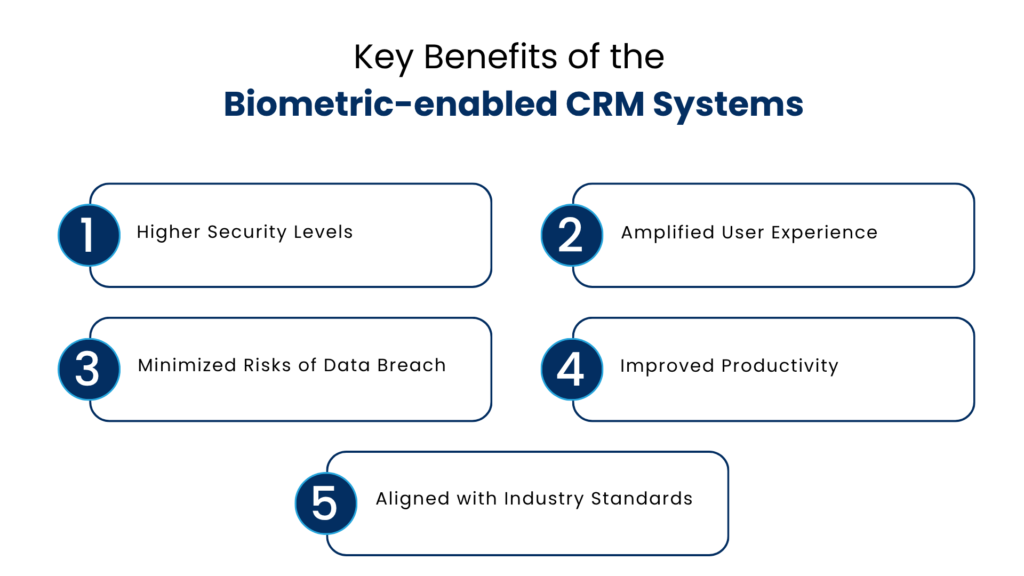
If the AI-led Salesforce biometric verification solution, especially Aadhaar, which is the most widely used ID proof, is executed correctly, it can make a huge impact on the customer onboarding process. The key benefits of this integration include:
Higher Security Levels
The fact that biometrics cannot be easily duplicated ensures higher security levels for sensitive customer data kept on Salesforce.
Amplified User Experience
Biometric authentication makes it unnecessary to memorize complicated passwords, thus simplifying logging into Salesforce and increasing employee productivity.
Minimized Risks of Data Breach
Businesses can minimize risks associated with password attacks and phishing by making use of biometric authentication technologies.
Improved Productivity
Using biometric authentication to gain instant access to Salesforce will help employees work more efficiently.
Aligned with Industry Standards
Some businesses operate in industries where high standards of data security are necessary. Biometric authentication can help to maintain compliance.
Challenges Faced with Traditional Customer Onboarding
Before the rise of Salesforce KYC solutions in the market, businesses relied on traditional methods of KYC. This made the onboarding process extremely slow and inefficient, and other contributors are:
- Physical document collection and verification
- More error prone
- Delayed approvals and long turn around time
- Increased risk of theft and fraud
- Poor customer experiences due to long procedures
How Does the Salesforce Biometric Authentication Works – The 4 Steps to Security?
The biometric authentication in Salesforce is typically enabled via mobile phone or other secure frameworks. It is a 4 step process including:
- Salesforce biometric login → The user will login to the Salesforce CRM system
- Biometric prompt → The user is prompted for a biometric proof like fingerprint or facial recognition
- Salesforce identity verification → The CRM verifies the identity data via local database
- Access → Once verified successfully, the access is granted
This entire process is completed within Salesforce ensuring that no data is stored externally – maintaining privacy and security standards.
Understanding The Role of AI in Biometric Authentication Solution
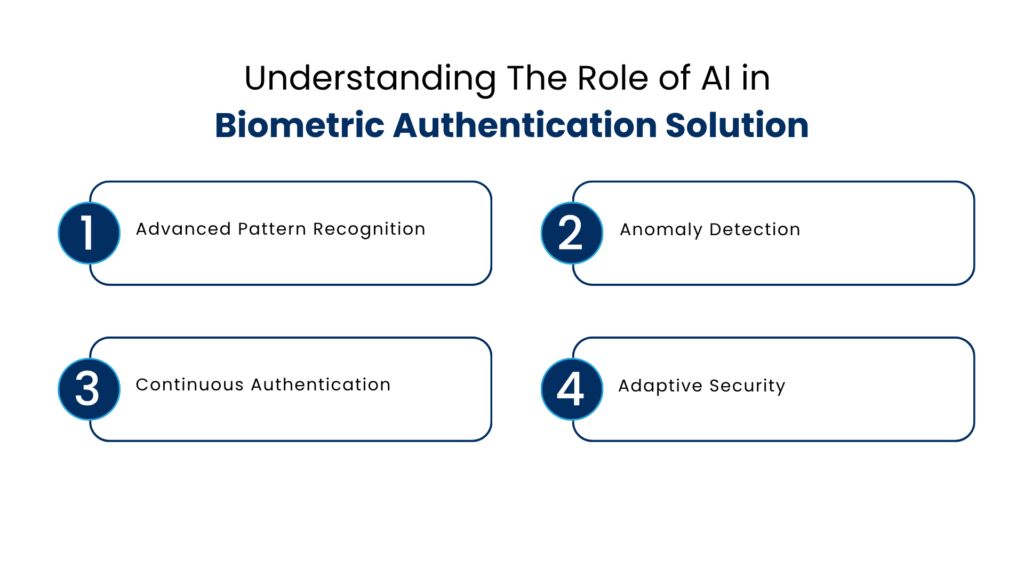
With the advancement in technology, AI is gaining its importance even when it comes to KYC solutions. The Salesforce biometric authentication uses AI in several ways and is a major contributor to faster verification processes.
- Advanced Pattern Recognition: AI systems use algorithms to examine biometric information with high precision to authenticate a person.
- Anomaly Detection: AI systems are capable of detecting anomalous behavior to thwart any attempt at fraud.
- Continuous Authentication: AI systems can conduct real-time authentication throughout a session.
- Adaptive Security: AI-based systems can customize their security settings depending on the level of risk involved.
Challenges Faced while Implementing Salesforce Authentication Methods
The biometric authentication methods in Salesforce have numerous benefits. However, one wrong step can lead to disasters. Here are a few challenges that the organisations may face while implementing the biometric-enabled CRM systems –
- Initial setup and cost of the solution (IdentryX) may be expensive and heavy on the pockets
- Users initially may be hesitant to share biometric data
- Requires a compatible device and CRM systems
- Aligning with the existing Salesforce systems will require experts
Best Practices for Implementing Salesforce Biometric Authentication
- Use in Combination with Multi-Factor Authentication (MFA)
- Securely Store Biometric Data
- Train users in proper usage of the biometric system.
- Conduct audits regularly to detect any vulnerabilities.
- Collaborate with professionals who have experience in implementing the technology.
Use Cases in Various Sectors
The KYC Salesforce verification is used across multiple industries for various different purposes. These include:
Banks and Financial Services
Biometrics are used by banks to authenticate customers’ transactions and secure their financial details.
Health Care Sector
Health care facilities employ biometric technology for ensuring secure access to patients’ files and maintaining confidentiality.
E-commerce and Retail
Organizations deploy biometric security systems to safeguard customer information and optimize internal processes.
Real Estate Industry
Real estate agents can perform transactions and obtain clients’ details without any fear of data breach.
The Future of CRM Security
The future of CRM security will be intelligent, adaptable, and friendly to users. The following advancements may be expected in the development of Salesforce biometric authentication:
- AI-based behavioral biometrics
- Wearable device integration
- Advanced MFA systems
- Increased emphasis on privacy and compliance
Conclusion
With the Salesforce biometric authentication solution, businesses will be able to enhance their CRM security dramatically. The new biometric authentication technology allows for achieving a much better level of security compared to conventional means of verifying users’ identities through passwords.
In light of ever-evolving cyber threats, it is crucial that businesses adopt a proactive approach to ensuring their security. Biometric authentication technology, coupled with other innovative approaches and modern techniques, offers a comprehensive and highly efficient solution.
FAQs
What is biometric authentication in Salesforce?
Biometric authentication uses a set of unique parameters and characteristics to verify a user’s identity. These characteristics include fingerprint, facial recognition, iris scans, and voice recognition.
How does biometric authentication by Salesforce work?
It consists of signing into Salesforce, offering biometric data, confirming the user’s identity using the system, and gaining access after authentication.
How can AI help in enhancing biometric authentication at Salesforce?
AI helps in detecting patterns, anomalies, continuous authentication, and adaptive security to increase the precision and avoid fraudulent activities.
In what industries is biometric authentication by Salesforce utilized?
Salesforce biometric authentication is used in the banking industry, healthcare industry, e-commerce, and real estate sectors.
What are the future aspects of biometric authentication by Salesforce?
Future aspects include behavioral biometrics, wearable technology integration, advanced MFA platforms, and greater emphasis on privacy and compliance issues.
For more insights, updates, and expert tips, follow us on LinkedIn.